
Why Simplicity Wins in Macadamia Processing Plants
In industrial engineering there is a principle that has proven itself again and again across industries:
The best systems are often the simplest ones.
This is especially true in macadamia processing plants, where reliability, uptime, and consistent product quality are far more important than complexity or technical novelty.
After years of designing and building macadamia processing systems, one of the biggest lessons is this:
Overcomplication is one of the most common causes of operational problems.
At Systeco, our approach has evolved strongly toward practical simplicity. Not because it is easier to design, but because experience has shown that simple systems are more reliable, easier to operate, and ultimately more profitable for farmers and processors.

The Natural Tendency to Overengineer
In the design phase of any factory, a familiar pattern often appears.
Someone asks:
“But what if this happens?”
Then another scenario appears.
“What if the system needs to do this?”
And then another.
Before long, the design begins to accommodate dozens of theoretical situations that may never occur in real operation.
This process can quickly lead to:
- Complex automation logic
- Additional sensors and control points
- Multiple fallback systems
- Interfaces filled with features operators rarely use
While each addition may seem logical on its own, the combined result is often a system that is far more complicated than necessary.
In practice, many of these hypothetical scenarios never occur. Yet the complexity remains.
Complexity Often Creates More Risk, Not Less
It is easy to assume that adding more technology makes a system safer or more robust.
In reality, complex systems often introduce more failure points.
Research in industrial reliability consistently shows that increasing system complexity increases the number of potential failure modes.
For example:
- More sensors mean more components that can fail.
- More automation logic means more possible software faults.
- More user interface options increase the chance of operator errors.
A simple conveyor system with a few well-placed sensors will often run for years with minimal issues.
An overengineered system with dozens of inputs and conditions may create more downtime simply because there are more things that can go wrong.
Operators Must Be Able to Run the Factory
Another overlooked consequence of overengineering is the effect on the people running the plant.
A macadamia processing plant is not operated by software engineers. It is run by operators, technicians, and farm teams.
When automation systems become too complicated, operators face challenges such as:
- Screens filled with confusing options
- Alarms that are difficult to interpret
- Control systems that require specialised knowledge
- Features that were paid for but never used
In these situations, operators often bypass systems or rely on manual workarounds simply because the automation is too complex to manage during normal operation.
A system that looks impressive during commissioning can quickly become frustrating on the factory floor.
Simplicity Improves Reliability
The relationship between simplicity and reliability is well understood in engineering.
Systems with fewer components, fewer interactions, and clearer control logic are generally easier to maintain and more stable over time.
This principle is used in industries such as aviation, manufacturing, and energy systems.
The same logic applies directly to macadamia processing plants.
A well-designed system focuses on:
- Clear product flow
- Minimal unnecessary transfers
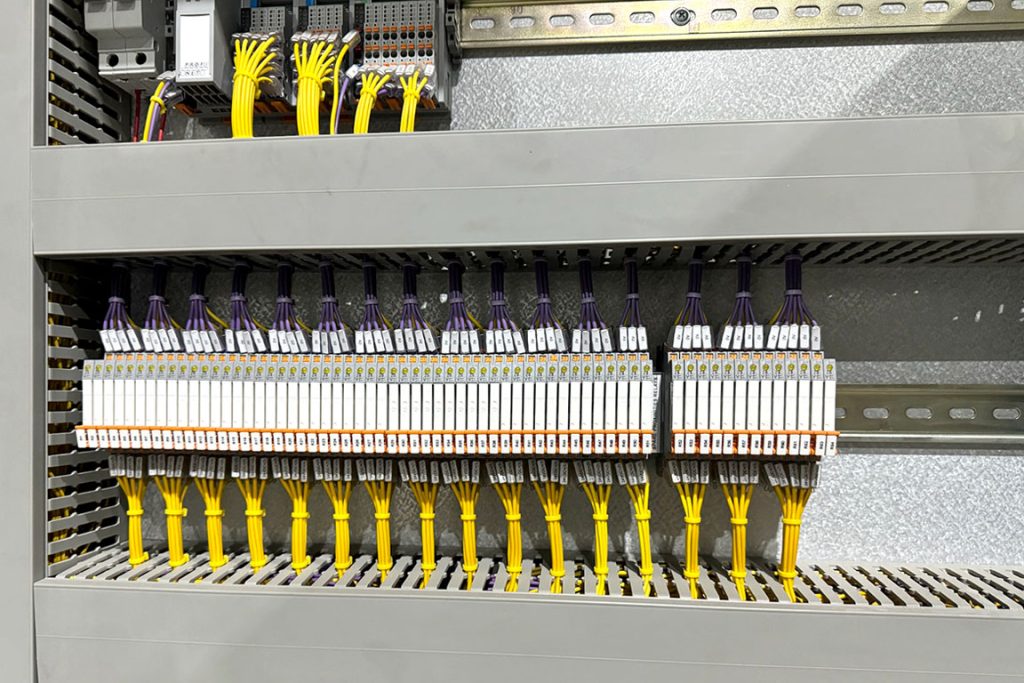
- Straightforward automation logic
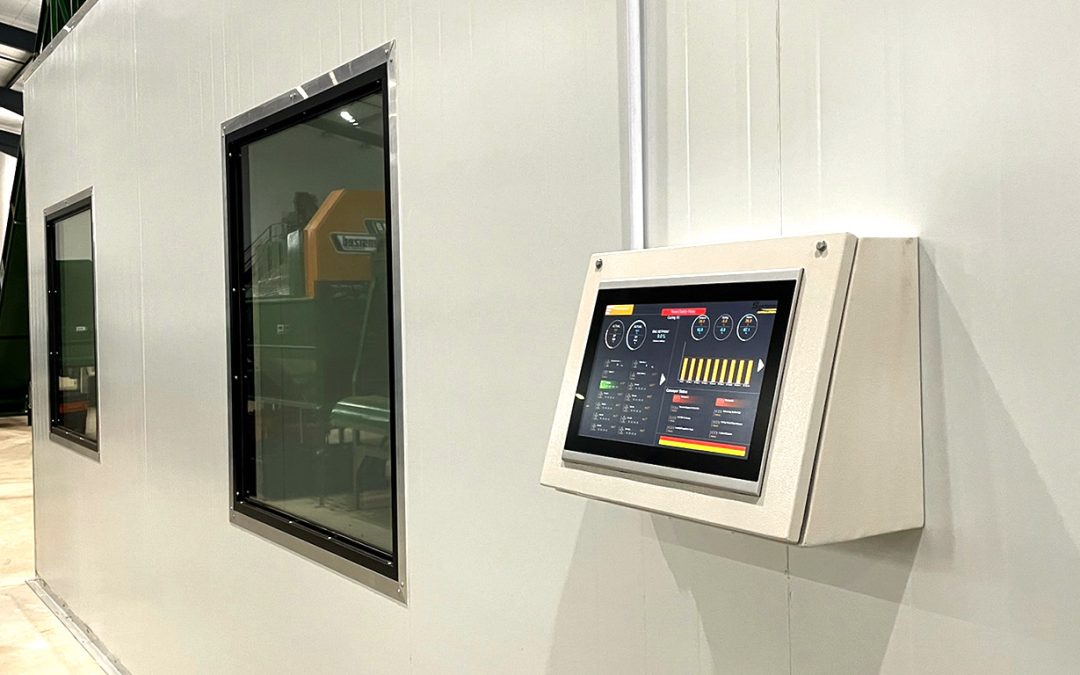
- Simple operator interfaces
The goal is not to remove technology, but to apply it where it actually creates value.
Experience Helps Identify What Really Matters
One of the biggest advantages of experience in factory design is the ability to distinguish between real operational needs and theoretical concerns.
With enough projects completed and plants running in different regions and conditions, patterns begin to emerge.
You learn:
- Which process steps truly require automation
- Which problems occur regularly
- Which “what if” scenarios almost never happen
- Which features operators actually use every day
This allows engineering teams to design systems that are focused on real operational requirements, rather than hypothetical possibilities.
Simplicity Does Not Mean Less Control
Choosing simplicity does not mean sacrificing control or insight.
In fact, modern systems allow plants to maintain very high levels of monitoring and data visibility while still keeping the operator interface straightforward.
For example:
Operators can run the plant through simple, intuitive controls, while management still has access to:
- Production trends
- Equipment performance data
- Alarm histories
- Energy usage
- Throughput statistics
This layered approach keeps daily operation simple while still providing valuable information for decision making.
The Value of Trust in the Design Process
One of the most rewarding outcomes in factory design occurs when a client places full trust in an experienced engineering team.
When that trust exists, the design process becomes focused on what truly matters:
- Reliable operation
- Clear workflows
- Maintainable equipment
- Simple automation logic
The result is often a factory that feels effortless to operate, even though a great deal of engineering knowledge sits behind it.
Operators can focus on running the plant instead of fighting with the system.

Simplicity Is a Sign of Maturity in Engineering
In many ways, simplicity is the result of experience.
Early designs often include every possible feature. Over time, engineers learn what truly adds value and what does not.
The most refined systems are rarely the most complex.
They are the ones where unnecessary complications have been removed.
The result is a plant that:
- Runs smoothly
- Is easy to operate
- Requires less troubleshooting
- Has fewer unexpected failures
A Simple System That Works Every Day
Macadamia processing plants are long-term assets.
They must operate through harvest seasons, heavy throughput, and real-world farm conditions.
In these environments, the goal is not technological complexity.
The goal is consistent, reliable performance.
By focusing on simplicity, practical engineering, and proven solutions, processing plants become easier to run and more resilient over time.
And when a factory runs smoothly, the entire operation benefits.
Contact us today Contact Systeco Group Today | Industrial Fabrication and Automation Solutions