
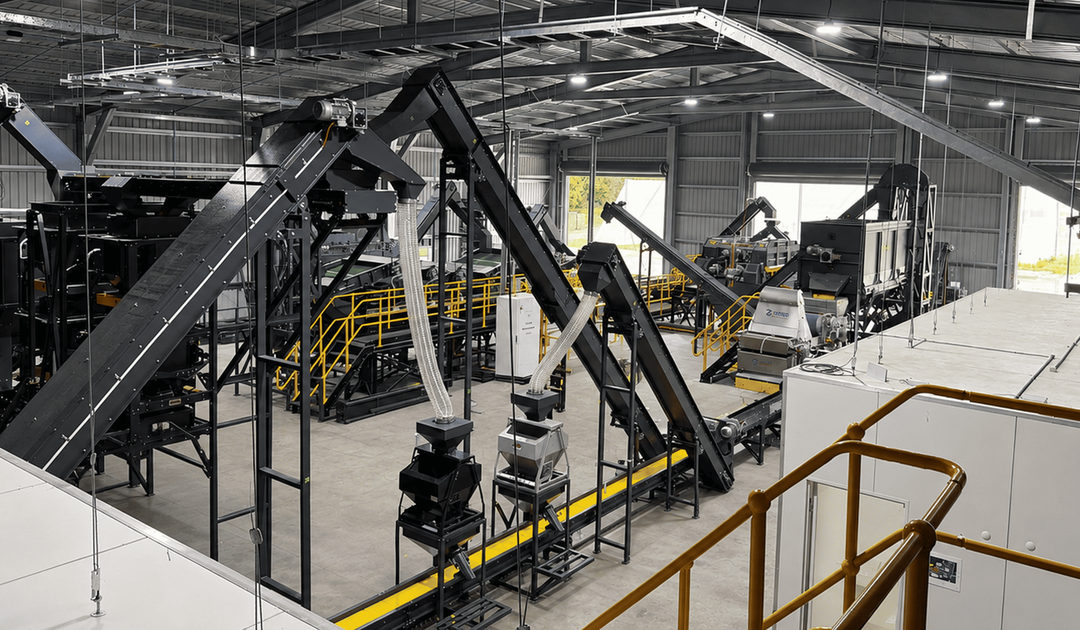
The First 24 Hours: What Happens to a Macadamia Nut After Harvest?
A macadamia nut can spend years growing on a tree, months developing its kernel and an entire season being managed carefully by the farmer.
Then it falls to the ground.
From that point, things start moving quickly.
The quality created in the orchard still needs to be preserved, and some of the most important decisions happen during the first hours after harvest. How quickly the nuts are collected, how they are stored before processing, how they are dehusked, how gently they are handled and how quickly controlled curing begins can all influence the quality eventually delivered to the processor.
This is why macadamia post-harvest processing should be seen as part of the production process, not something that happens after it.
So what should actually happen to a macadamia nut during those first 24 hours?
It Starts on the Orchard Floor
Once mature macadamias have fallen, the objective is simple: get them collected and into the post-harvest process as quickly as practical.
This becomes even more important during wet conditions.
Freshly harvested macadamias contain significant moisture. Leaving nut-in-husk, or NIH, sitting for extended periods creates conditions where heat and moisture can become a problem. Poor ventilation makes the situation worse.
The first lesson is therefore a simple one.
Don’t create unnecessary waiting time between the orchard and the dehusking plant.
A well-designed macadamia processing facility should have enough receival and dehusking capacity to deal with the farm’s actual harvest rate, particularly during peak periods.
This is where factory capacity starts to matter before the nut has even reached the first machine.
The husk provides the conditions and nutrients that support germination. The sooner you get the husk off, the sooner you reduce that risk.
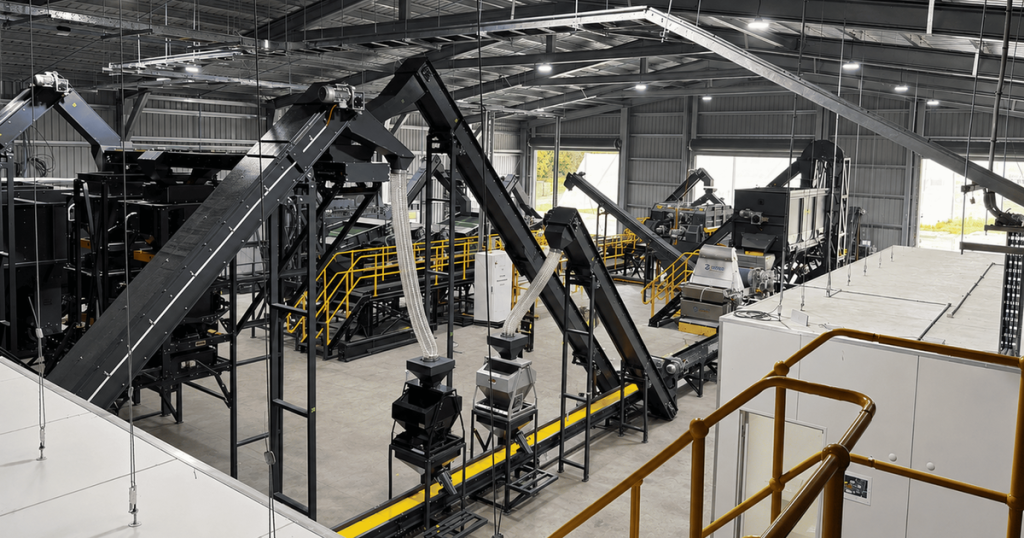
Dehusking Should Happen Quickly, But It Should Also Happen Gently
Once the macadamias reach the processing facility, one of the first major steps is dehusking.
The job sounds simple. Remove the green outer husk and leave the nut-in-shell, or NIS.
But good macadamia dehusking is about much more than getting the husk off.
A macadamia dehusker needs to remove the husk effectively without unnecessarily squeezing, deforming or damaging the shell. Bungay specifically warns against mechanical damage during dehusking because force transferred through the shell can bruise or damage the kernel inside.
That is an important point.
The shell can look fine while the value inside has already been affected.
This is why throughput cannot be the only measure of a good dehusker. A machine capable of moving large volumes means very little if achieving that throughput comes at the expense of product quality.
At Systeco, this is one of the principles behind our approach to macadamia dehusker design and macadamia processing equipment. Throughput matters, but so do gentle handling, low rework, reliability, ease of operation and what happens to the nut while it passes through the machine. Systeco’s own project standards, for example, define both dehusker throughput and performance expectations around rework and breakage.
After the Dehusker, Every Transfer Still Matters
Getting the husk off does not mean the nut is suddenly safe from mechanical damage.
It still has to travel through the factory.
Conveyors, tumblers, sorting equipment, elevators, chutes and transfer points all have an opportunity to either handle the product correctly or introduce unnecessary impact.
This is one of those areas where good macadamia processing plant design can look surprisingly simple.
Don’t move the nut more than necessary.
Don’t create unnecessary drops.
Don’t add another transfer point unless it serves a purpose.
And don’t design the factory around machinery individually. Design the product flow as one complete system.
Systeco manufactures the dehuskers, conveyors, tumblers, curing equipment, hoppers, sorting systems and other equipment required through this process, which allows the complete product path to be considered rather than treating every machine as an isolated piece of equipment.
The Nut Should Be Moving Towards Curing
There is another important point that can easily be overlooked.
The objective of the dehusking facility is not simply to get through today’s harvest.
It is to get the nut safely into controlled curing.
If the macadamia dehusker can process product faster than the curing system can receive it, the bottleneck has simply moved somewhere else.
Suddenly there are tonnes of freshly dehusked NIS waiting for bin space.
That is why macadamia dehusking capacity and macadamia curing capacity need to be designed together.
Receival, dehusking, sorting, conveying and curing should form one continuous process with enough capacity and buffering to handle the farm’s real harvest conditions.
This becomes particularly important as orchards mature and annual production increases.
Then the Preservation Process Really Begins
Once the NIS reaches the curing bins, the focus changes from moving product to controlling its environment.
This is where macadamia curing begins.
And curing should not simply be thought of as “drying the nuts”.
The objective is preservation.
Systeco’s design and engineering philosophy places considerable importance on controlling the relationship between temperature, relative humidity, airflow and time. The aim is to remove moisture without creating conditions that unnecessarily damage the kernel.
This is also why simply adding more heat is not the answer.
Heating the air reduces its relative humidity and increases its ability to take up moisture. But that air still needs to move correctly through the nuts, and the curing environment needs to remain controlled.
Poor curing conditions can contribute to serious quality problems, including mould, kernel discolouration and other deterioration.
Recent post-harvest research likewise identifies delayed dehusking as a quality risk and recommends prompt dehusking after harvest.
This Is Where Automation Starts Protecting the Crop
Once product enters the curing room, the farmer cannot realistically stand next to every bin 24 hours a day.
This is where macadamia curing automation becomes valuable.
A properly automated curing system can continuously monitor and control the conditions that matter, including temperatures, fans, heating supply and other equipment.
If a bin fan stops, the system should know.
If the heating supply fails, the system should know.
If temperatures move outside the required range, the operator should know.
Systeco’s automation systems use PLC and SCADA technology to monitor and control industrial processes locally and remotely, including temperature-control applications.
The point of automation isn’t to make the curing room complicated.
It is actually the opposite.
Make the correct process happen consistently without depending on someone noticing that something has gone wrong.
The First 24 Hours Are Really About Preserving What You Already Have
There is an important way to think about all of this.
Your macadamia processing plant doesn’t create the quality produced in the orchard.
The orchard has already done that.
The job of the processing facility is to preserve as much of that quality and value as possible.
That means collecting promptly.
Dehusking quickly and gently.
Moving the NIS without unnecessary impact.
Getting product into the curing system without avoidable delays.
And then controlling the curing environment properly.
None of those things are particularly complicated on their own.
The difficulty is getting all of them to happen correctly, together, every day during harvest.
A Macadamia Processing Plant Should Be Designed Around the Nut
At Systeco, we design turnkey macadamia processing plants around this complete journey.
The dehusker cannot be designed without thinking about what feeds it.
The conveyors cannot be designed without thinking about how they handle the nut.
The curing room cannot be designed without considering how quickly product arrives.
And the automation cannot be designed without knowing how the complete macadamia processing plant needs to operate.
That’s why engineering, macadamia processing equipment, dehusking, conveyors, curing, heating, electrical systems and automation work best when they are considered as one system.
Because once that macadamia leaves the orchard, the clock has started.
The objective from that point is simple:
Get it out of the husk, handle it gently, get it under controlled curing conditions, and protect the value the farmer has spent the entire season producing.
Contact us today Contact Systeco Group Today | Industrial Fabrication and Automation Solutions