
There’s no shortage of machinery available to macadamia farmers today, especially when evaluating Macadamia Processing Equipment: Price vs Quality.
Spend a few minutes searching online and you’ll find macadamia dehuskers, conveyors, sorting machines and even complete processing lines available from manufacturers around the world. Many of them come with attractive prices, impressive specifications and professional-looking videos, but the real question is regarding Macadamia Processing Equipment: Price vs Quality.
And naturally, when a farmer receives a quotation for a macadamia processing plant, the question comes up.
Understanding the balance between cost and quality is essential in evaluating Macadamia Processing Equipment: Price vs Quality.
“Why should I pay more when I can import something similar from China for less?”
It’s a fair question. Anyone investing millions into a processing facility should be comparing prices and looking for value.
But after years of designing, manufacturing and commissioning macadamia processing plants, we’ve learned that the price of a machine and the cost of owning that machine are two very different things, particularly when considering Macadamia Processing Equipment: Price vs Quality.
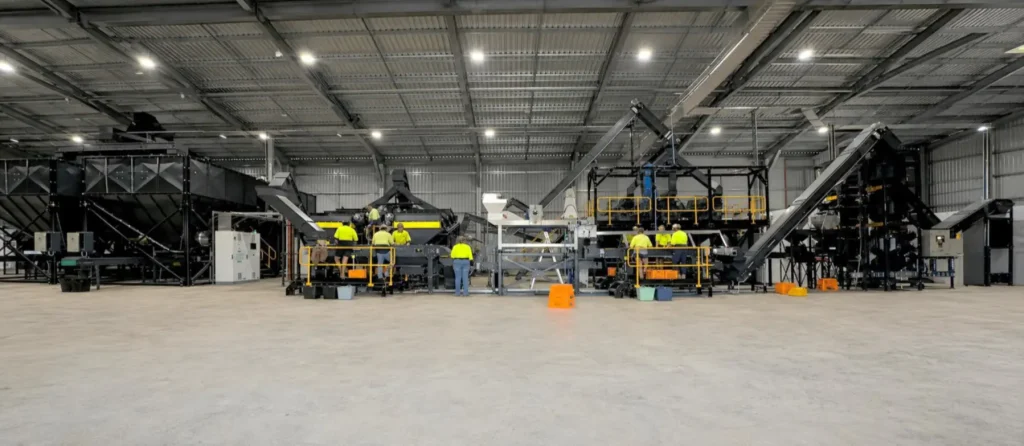
In the end, the choice between price and quality will define your success in the industry, making Macadamia Processing Equipment: Price vs Quality a critical factor to consider.
A Machine Is Only as Good as Its Performance
On paper, comparing two macadamia dehuskers can look straightforward.
Both manufacturers might claim a throughput of 5 tonnes per hour. Both machines remove husks. Both have motors, rollers and steel frames.
One costs considerably less.
When considering options, it’s essential to weigh the differences in quality and price of macadamia processing equipment. This leads us to the pivotal discussion of Macadamia Processing Equipment: Price vs Quality, which highlights the importance of understanding both aspects before making a purchase.
So why wouldn’t you buy the cheaper one?
The difficulty is that a specification sheet rarely tells the complete story.
How does the machine perform with different nut sizes? What happens when the incoming product is particularly wet? How much rework does it produce? How gently does it handle the nut? Can the operator adjust it easily? And can it sustain the advertised throughput during a busy harvest?
These are the questions that matter once the machine is installed.
A macadamia dehusker isn’t simply there to remove the husk. It needs to do that job consistently while protecting the nut inside.
A machine that looks cheaper on the quotation can become expensive if it introduces unnecessary product damage, requires constant adjustment or struggles to achieve the expected throughput.
And those costs don’t always appear immediately.
The Real Cost of a Machine Is What Happens After You Buy It
Imagine two macadamia dehuskers.
One costs R500,000 and the other costs R700,000.
At first glance, the cheaper machine saves R200,000. That’s a substantial difference.
But what happens if the cheaper machine needs more labour, produces more rework or regularly stops during harvest?
Consider a factory processing 1,000 tonnes per season. If equipment problems result in just R200 of additional cost or lost value per tonne, that’s R200,000 over one season.
Over five seasons, the difference becomes R1 million, before considering inflation or the time value of money.
That’s a hypothetical example, not a claim about any particular manufacturer’s equipment. But it illustrates why the purchase price should never be the only number used to compare macadamia processing equipment.
The real comparison should include operating costs, maintenance, labour, product quality, reliability and the expected working life of the machinery.
Experience Is Something You Cannot See on a Quotation
One of the biggest differences between machinery manufacturers is experience.
And experience isn’t simply how many years a company has been in business.
It’s what they’ve learned during those years.
At Systeco, we’ve worked on macadamia processing facilities across different countries, climates and operating conditions. We’ve designed equipment, manufactured it, installed it, commissioned it and seen how it performs once the harvest starts.
That experience changes the way you approach engineering.
You learn which parts wear first. You learn where nuts tend to get damaged. You learn which conveyor layouts cause problems and which designs make maintenance unnecessarily difficult.
You also learn that the most complicated solution isn’t always the best one.
A great deal of engineering goes into making a machine simple, reliable and easy to operate.
That’s difficult to appreciate when you’re comparing two photographs and a price.
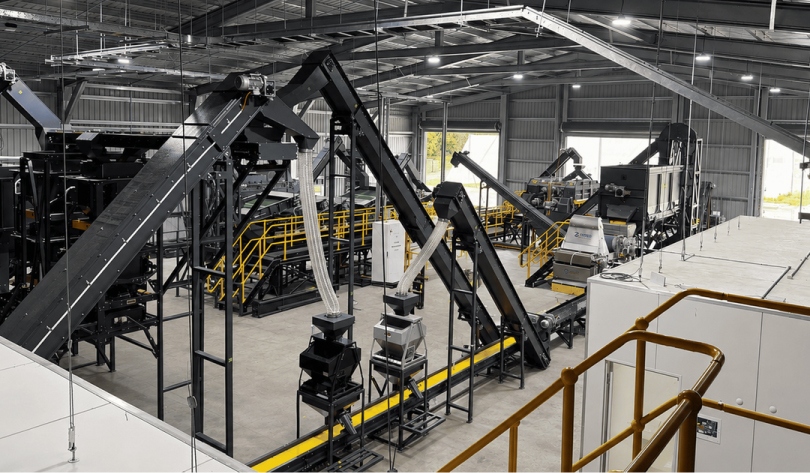
Buying a Dehusker Is One Thing. Building a Factory Is Another.
This is probably the most important point.
A macadamia processing plant isn’t a collection of individual machines that happen to be standing in the same building.
It’s one connected process.
The receival system feeds the dehusker. The dehusker feeds the separation and sorting equipment. Conveyors move the product into the curing system. The automation manages how everything works together.
If one section cannot keep up, it affects the rest of the factory.
You might buy a macadamia dehusker rated at 8 tonnes per hour, but if the downstream conveyor can only handle 5 tonnes per hour, the factory still has a problem.
Or perhaps the equipment works individually, but nobody has properly considered how the machines communicate, how blockages are managed or how the operator controls the complete line.
This is where buying individual machines from different suppliers can become challenging.
It can certainly work, provided someone takes responsibility for the overall engineering and integration.
But that responsibility needs to be clear before the equipment arrives.
At Systeco, we design, manufacture and automate complete macadamia processing plants. That allows us to consider the entire product flow, from receival and dehusking through to curing, cracking and further processing.
The objective isn’t simply to supply machines that work. It’s to deliver a factory that works.
What Happens When Something Goes Wrong?
Every mechanical system requires maintenance. Components wear, bearings fail and equipment occasionally needs attention.
That applies to machinery manufactured in South Africa, China, Europe or anywhere else.
The difference is how quickly the problem can be identified and resolved.
If a machine stops during harvest, can you get the required spare part?
Is there someone who understands the equipment well enough to help diagnose the problem?
Can you obtain drawings, replacement components and technical assistance?
And if the problem involves the automation, mechanical equipment and electrical system working together, who takes responsibility?
These are important questions to ask any supplier.
A good manufacturer should be able to explain how they support their equipment after installation, not simply how they intend to deliver it.
For a farmer, that support can become particularly valuable when the entire day’s harvest depends on getting a machine running again.
Imported Machinery Isn’t Necessarily Bad Machinery
It’s worth making this clear.
There are excellent machinery manufacturers in China, just as there are poor manufacturers in other parts of the world.
The country where equipment is manufactured does not automatically determine its quality.
What matters is the engineering, manufacturing standards, proven performance and support behind the product.
Imported machinery can absolutely make financial sense in the right application.
But farmers should compare equipment on more than price, particularly when purchasing machinery that will become a critical part of their operation.
Ask for evidence of performance. Speak to existing customers. Find out how long the equipment has been operating. Understand the spare parts requirements and make sure the specifications are relevant to your own processing conditions.
A demonstration video is useful.
A machine that has successfully completed several harvest seasons is far more convincing.
Quality Is About More Than Heavy Steel
There’s another misconception worth addressing.
People often judge industrial equipment by how heavily it’s built.
Thicker steel, larger motors and heavier frames can create the impression of better quality.
But good macadamia processing equipment is about much more than that.
The correct materials need to be used in the correct places. Components should be accessible for maintenance. Product flow needs to be considered. Motors and gearboxes should be selected for the actual application.
Most importantly, the machinery needs to handle macadamias correctly.
A beautifully manufactured machine that damages the product or creates unnecessary labour isn’t necessarily a good machine.
At Systeco, our engineering approach is based on practical performance. We want equipment that operators can use confidently, maintenance teams can work on and farmers can depend on throughout the season.
That is where good design, manufacturing quality and real operating experience come together.
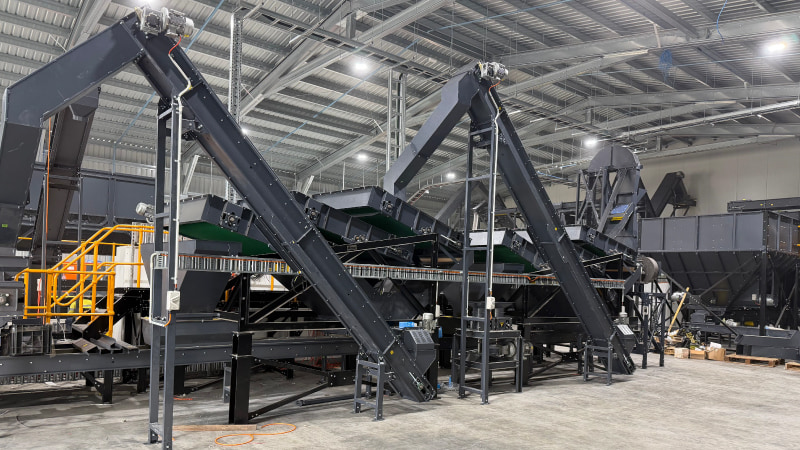
The Cheapest Quote Isn’t Always the Best Investment
A macadamia processing plant is not something most farmers replace every few years.
It’s a long-term investment, often expected to serve the farm for many harvest seasons.
Over that time, the original purchase price becomes just one part of the total cost.
Energy consumption, labour, maintenance, downtime, spare parts, product damage and future expansion all influence what the factory ultimately costs to own and operate.
Sometimes the cheaper machine will genuinely offer the better value.
Other times, spending more upfront can save considerably more over the life of the equipment.
The important thing is knowing the difference before making the decision.
Buy the Engineering, Not Just the Machine
At Systeco, we’re proud of what we’ve built since 2015.
We’ve earned the trust of major names in the macadamia industry, including Golden Macadamias, Marquis Macadamias and Macadamia Farm Management in Australia, along with farmers and processors across several countries.
That experience didn’t come from simply manufacturing equipment and shipping it to customers.
It came from working alongside the people who operate these factories, solving real problems and continually improving the way macadamias are processed.
We believe the best machinery is the equipment that continues delivering value long after the invoice has been paid.
So, when comparing quotations for your next macadamia dehusker or processing plant, look beyond the purchase price.
Look at the engineering. Look at the experience. Look at the performance. Look at the support.
Because ultimately, you’re not buying a machine to save money on the day you purchase it. You’re buying a machine to make money for the next ten or twenty years.
Contact us today Contact Systeco Group Today | Industrial Fabrication and Automation Solutions